
The direct answer
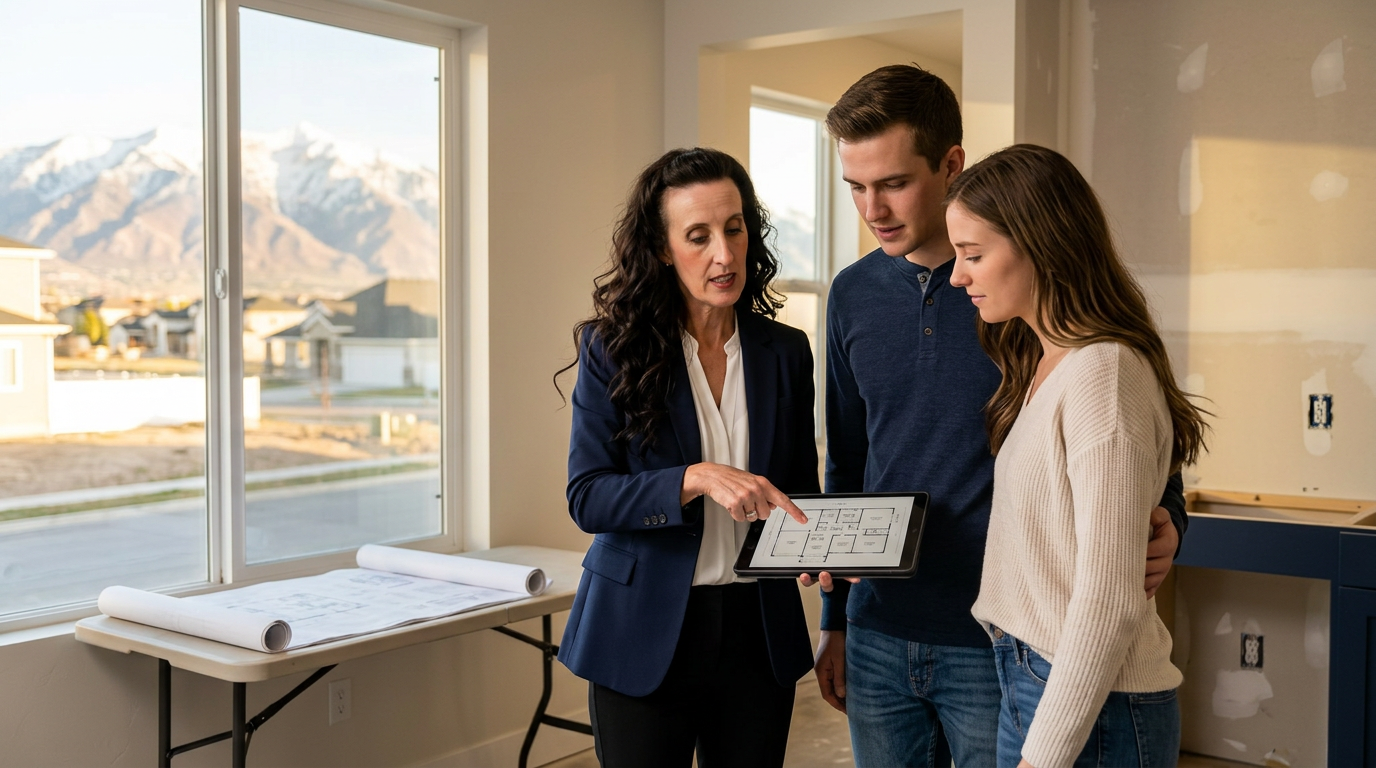
No, Utah does not require you to have a real estate agent to buy from a builder — but the builder's on-site sales representative is not your agent. That person is employed by, or contracted to, the builder, and their duty runs to the builder. If you walk into a Utah model home unrepresented, no one in the transaction is contractually responsible for protecting your interests when you sign the builder's purchase contract, choose upgrades, negotiate incentives, review the construction timeline, or handle warranty items after closing.
The practical rule in Utah new-construction communities: if you plan to use your own agent, bring them to your first visit and have them registered on your very first sign-in. Most builders have a registration policy, and many will not recognize an agent introduced after you have already toured or written an offer alone.
This asset is educational. Builder policies, incentive structures, and contract terms vary by builder and community — verify the current terms in writing before signing.
Who the model-home sales representative actually works for
Utah builder sales representatives are typically licensed, friendly, and genuinely knowledgeable about their community. They are also paid by the builder to sell the builder's homes at the builder's terms. That is not a criticism — it is a disclosure issue. Under Utah agency practice, an agent's duties (loyalty, confidentiality, and negotiation on your behalf) attach to the party they represent. When you are unrepresented, you are self-representing across a contract that the builder's attorneys wrote.
Buyers frequently share their maximum budget, their timeline pressure, and their financing situation with the sales rep on the first visit. Every one of those disclosures is negotiating leverage in the builder's hands.
What a buyer's agent actually does on a new-construction purchase
| Stage | Unrepresented buyer | Buyer with an agent |
|---|---|---|
| Contract review | Builder's addenda read alone | Agent flags escalation, delay, and cancellation clauses |
| Incentives | Accepts posted incentive | Compares incentive value against total cost and rate buydown terms |
| Upgrades | Design-center pricing taken at face value | Separates resale-value upgrades from post-close purchases |
| Inspections | Often skipped ("it's new") | Pre-drywall and final walkthrough inspections scheduled |
| Warranty | Punch list handled solo | Documented list and follow-up through the warranty window |
Who pays the agent in a Utah builder transaction?
Historically, most Utah builders budgeted a cooperating broker fee into their marketing cost and paid the buyer's agent at closing. Following the 2024 industry settlement changes to how broker compensation is offered, that is no longer automatic anywhere — it is negotiated. Buyers now sign a written buyer-broker agreement before touring, and the source of that compensation (builder-paid, seller-paid, or buyer-paid) is spelled out up front.
What has not changed: builders rarely reduce the base price simply because you arrived without an agent. Their pricing protects the appraised value of every other home in the community. Ask directly, in writing, what the builder offers to a buyer's broker and whether declining representation changes your price. Get the answer before you sign anything.
The first-visit registration rule
- Choose your agent before you tour any Utah model home.
- Have the agent accompany you, or register them in writing on the first sign-in card.
- Confirm the builder's registration policy in writing that same day.
- Keep a copy — policies are enforced strictly and retroactive registration is usually refused.
Financing: the builder's lender versus your own
Utah builders commonly attach their largest incentives — closing-cost credits, permanent or temporary rate buydowns, design-center dollars — to using their affiliated lender. That can be a genuinely strong deal, and it can also be a higher-cost loan wrapped in a headline incentive. The only way to know is to get a Loan Estimate from the builder's lender and a Loan Estimate from an independent Utah lender on the same day, then compare rate, points, lender fees, and total cost over the years you actually expect to keep the loan.
New construction also raises rate-lock timing. If your home is six to ten months from completion, ask about extended lock and float-down options and what they cost, and confirm what happens to your rate and your incentive if the builder's completion date slips.
Compare the payment two ways in the mortgage calculator and check your overall price range in the home affordability calculator before you commit to a lot.
Utah-specific realities to verify
- Utah new-construction contracts are usually the builder's own form, not the standard REPC — deadlines and remedies differ.
- Many Wasatch Front and Washington County communities carry an HOA with dues, design rules, and reserve obligations that affect qualification.
- Landscaping, fencing, window coverings, and a water-wise yard are frequently excluded from base price in Utah communities.
- Property taxes are often quoted on unimproved land value at first — budget for the reassessed value once the home is complete.
- Ask whether the community sits in a special assessment or improvement district that adds an annual charge.