
Utah Homeownership Knowledge Center
Deep, Utah-specific knowledge assets on buying, financing, and owning a home — organized by topic cluster and authored by a Utah mortgage banker with three decades of local experience.
Recently published
The newest knowledge assets, most recent first.
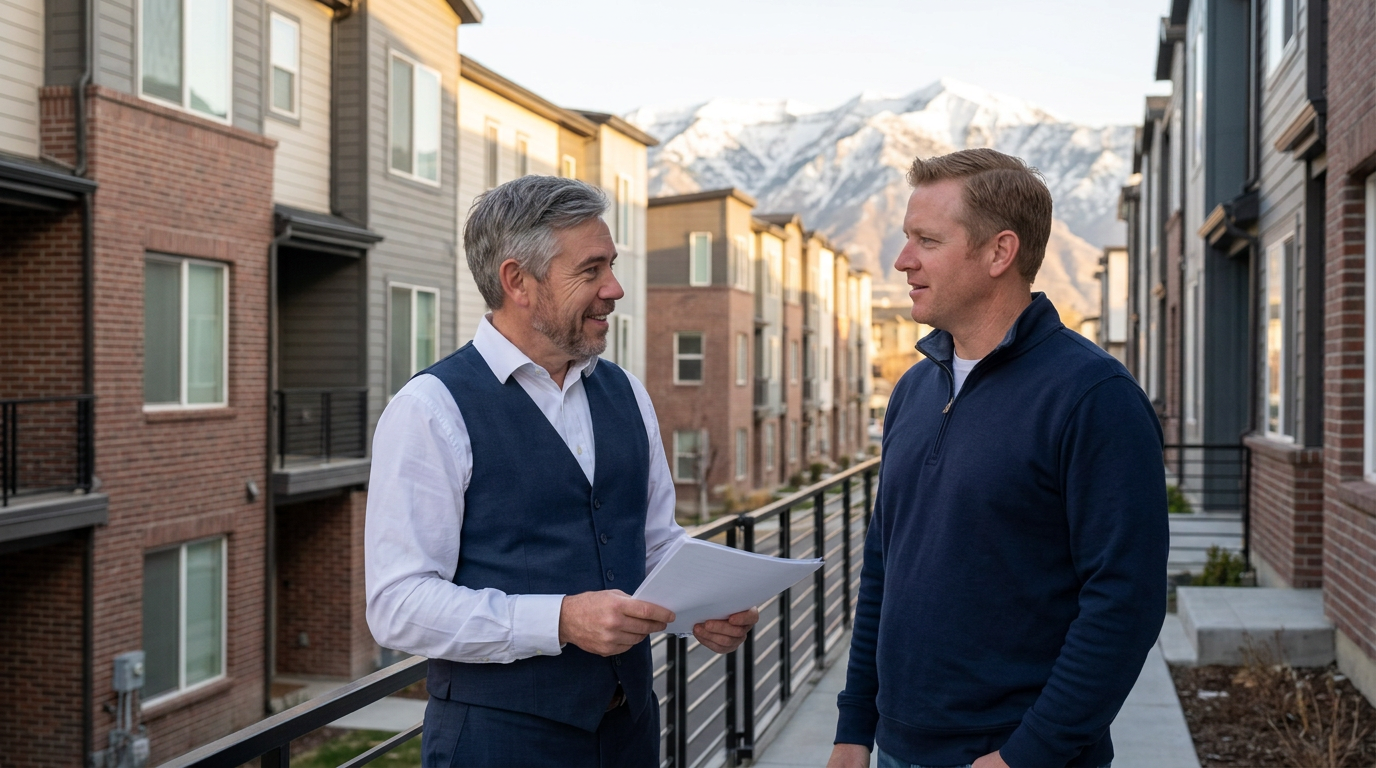
A Cedar Hills, Utah guide to buying a condo with a VA loan: how VA project approval works, what lenders check, and how zero-down financing applies inside approved projects.

A Highland, Utah guide to buying a condo with a VA loan: how VA project approval works, what lenders check, and how zero-down financing applies inside approved projects.

A Alpine, Utah guide to buying a condo with a VA loan: how VA project approval works, what lenders check, and how zero-down financing applies inside approved projects.

A Orem, Utah guide to VA loans above the county conforming limit: full vs. partial entitlement, when a down payment applies, and what lenders still check.

A Mapleton, Utah guide to VA loans above the county conforming limit: full vs. partial entitlement, when a down payment applies, and what lenders still check.

A Cedar Hills, Utah guide to VA loans above the county conforming limit: full vs. partial entitlement, when a down payment applies, and what lenders still check.
All knowledge assets, newest first
Every published knowledge asset, sorted automatically by publication date — newest at the top, oldest at the bottom.
- Buying a Condo With a VA Loan in Cedar Hills, Utah: How Project Approval WorksOctober 15, 2026
- Buying a Condo With a VA Loan in Highland, Utah: How Project Approval WorksOctober 14, 2026
- Buying a Condo With a VA Loan in Alpine, Utah: How Project Approval WorksOctober 13, 2026
- VA Loans Above the County Loan Limit in Orem, Utah: How Zero Down Can Still WorkOctober 12, 2026
- VA Loans Above the County Loan Limit in Mapleton, Utah: How Zero Down Can Still WorkOctober 11, 2026
- VA Loans Above the County Loan Limit in Cedar Hills, Utah: How Zero Down Can Still WorkOctober 10, 2026
- VA Loans Above the County Loan Limit in Highland, Utah: How Zero Down Can Still WorkOctober 9, 2026
- VA Loans Above the County Loan Limit in Alpine, Utah: How Zero Down Can Still WorkOctober 8, 2026
- VA Closing Costs in Orem, Utah: What a Veteran Should Budget Before ClosingOctober 7, 2026
- VA Closing Costs in Mapleton, Utah: What a Veteran Should Budget Before ClosingOctober 6, 2026
- VA Closing Costs in Cedar Hills, Utah: What a Veteran Should Budget Before ClosingOctober 5, 2026
- VA Closing Costs in Highland, Utah: What a Veteran Should Budget Before ClosingOctober 4, 2026
- VA Closing Costs in Alpine, Utah: What a Veteran Should Budget Before ClosingOctober 3, 2026
- How to Make a Strong VA Offer in Highland, Utah Without Giving Up Key ProtectionsOctober 2, 2026
- How to Make a Strong VA Offer in Alpine, Utah Without Giving Up Key ProtectionsOctober 1, 2026
- VA Appraisals in Orem, Utah: What Buyers and Sellers Should ExpectSeptember 30, 2026
- VA Appraisals in Mapleton, Utah: What Buyers and Sellers Should ExpectSeptember 29, 2026
- VA Funding Fee in Mapleton, Utah: Who Pays It and Who May Be ExemptSeptember 28, 2026
- Zero-Down VA Loans in Orem, Utah: What Veterans Still Need Cash ForSeptember 27, 2026
- Zero-Down VA Loans in Mapleton, Utah: What Veterans Still Need Cash ForSeptember 26, 2026
- Zero-Down VA Loans in Cedar Hills, Utah: What Veterans Still Need Cash ForSeptember 25, 2026
- Zero-Down VA Loans in Highland, Utah: What Veterans Still Need Cash ForSeptember 24, 2026
- VA Loan Entitlement in Cedar Hills, Utah: How First-Time and Repeat Use WorksSeptember 23, 2026
- VA Loan Entitlement in Highland, Utah: How First-Time and Repeat Use WorksSeptember 22, 2026
- VA Loan Entitlement in Alpine, Utah: How First-Time and Repeat Use WorksSeptember 21, 2026
- VA Loan Eligibility in Orem, Utah: Who Qualifies and What Documents MatterSeptember 20, 2026
- Zero-Down VA Loans in Alpine, Utah: What Veterans Still Need Cash ForSeptember 19, 2026
- VA Loan Entitlement in Orem, Utah: How First-Time and Repeat Use WorksSeptember 18, 2026
- VA Loan Entitlement in Mapleton, Utah: How First-Time and Repeat Use WorksSeptember 17, 2026
- VA Funding Fee in Alpine, Utah: Who Pays It and Who May Be ExemptSeptember 16, 2026
- VA Loan Eligibility in Mapleton, Utah: Who Qualifies and What Documents MatterSeptember 15, 2026
- VA Funding Fee in Highland, Utah: Who Pays It and Who May Be ExemptSeptember 14, 2026
- VA Loan Eligibility in Cedar Hills, Utah: Who Qualifies and What Documents MatterSeptember 13, 2026
- VA Funding Fee in Cedar Hills, Utah: Who Pays It and Who May Be ExemptSeptember 12, 2026
- VA Loan Eligibility in Highland, Utah: Who Qualifies and What Documents MatterSeptember 11, 2026
- VA Loan Eligibility in Alpine, Utah: Who Qualifies and What Documents MatterSeptember 10, 2026
- Manufactured vs. Modular Homes in UtahSeptember 9, 2026
- Which Utah Areas May Qualify for USDA Financing?September 8, 2026
- Condo vs. Townhome: What Utah Buyers Should KnowSeptember 7, 2026
- How Jumbo Mortgages Work in UtahSeptember 6, 2026
- Should You Age in Place or Downsize in Utah?September 5, 2026
- What Happens to a Mortgage During Divorce in Utah?September 4, 2026
- How Much Homeowners Insurance Do Utah Buyers Need?September 3, 2026
- How Much Should Utah Homeowners Keep in Emergency Savings?September 2, 2026
- How Property Tax Assessments Are Calculated in UtahSeptember 1, 2026
- What It Costs to Own a Home Along the Wasatch FrontAugust 31, 2026
- The Complete Utah Mortgage Refinance GuideAugust 30, 2026
- The Complete Utah Investment Property GuideAugust 29, 2026
- The Complete Utah First-Time Homebuyer GuideAugust 28, 2026
- Do You Need a Realtor When Buying From a Utah Builder?August 27, 2026
- What Credit Score Do You Need to Buy a House in Utah?August 26, 2026
- Spring Home Maintenance Checklist for UtahAugust 25, 2026
- The Complete Utah Reverse Mortgage GuideAugust 24, 2026
- VA Appraisals in Cedar Hills, Utah: What Buyers and Sellers Should ExpectAugust 23, 2026
- What Credit Score Do You Need for an FHA Loan in Utah?August 22, 2026
- VA Appraisals in Highland, Utah: What Buyers and Sellers Should ExpectAugust 21, 2026
- The Complete Utah VA Loan GuideAugust 20, 2026
- VA Appraisals in Alpine, Utah: What Buyers and Sellers Should ExpectAugust 19, 2026
- How to Price a Home for Sale in UtahAugust 18, 2026
- VA Funding Fee in Orem, Utah: Who Pays It and Who May Be ExemptAugust 17, 2026
- The Complete Guide to Buying a Home in UtahAugust 16, 2026
- VA Seller Concessions in Alpine, Utah: What Costs Can the Seller Pay?August 15, 2026
- How to Evaluate Luxury New ConstructionAugust 14, 2026
- How to Make a Strong VA Offer in Orem, Utah Without Giving Up Key ProtectionsAugust 13, 2026
- The Complete Utah FSBO Home-Selling GuideAugust 12, 2026
- How to Make a Strong VA Offer in Mapleton, Utah Without Giving Up Key ProtectionsAugust 11, 2026
- Utah Housing Corporation Programs and ResourcesAugust 10, 2026
- How to Make a Strong VA Offer in Cedar Hills, Utah Without Giving Up Key ProtectionsAugust 9, 2026
- Moving to Salt Lake City, UtahAugust 8, 2026
- VA Seller Concessions in Mapleton, Utah: What Costs Can the Seller Pay?August 7, 2026
- Salt Lake County Homeownership GuideAugust 6, 2026
- VA Seller Concessions in Cedar Hills, Utah: What Costs Can the Seller Pay?August 5, 2026
- The Complete Utah Energy-Efficient Home GuideAugust 4, 2026
- VA Seller Concessions in Highland, Utah: What Costs Can the Seller Pay?August 3, 2026
- The Complete Utah Manufactured Home Financing GuideAugust 2, 2026
- VA Seller Concessions in Orem, Utah: What Costs Can the Seller Pay?August 1, 2026
- The Complete Utah USDA Rural Home Loan GuideJuly 31, 2026
- The Complete Utah Condo and Townhome Buying GuideJuly 29, 2026
- The Complete Utah Luxury Homebuyer GuideJuly 27, 2026
- The Complete Utah Retirement Housing GuideJuly 25, 2026
- The Complete Utah Divorce and Mortgage GuideJuly 23, 2026
- The Complete Utah Homeowners Insurance GuideJuly 21, 2026
- How Utah Property Taxes WorkJuly 19, 2026
- The Complete Utah Home Maintenance CalendarJuly 17, 2026
- The First-Year Utah Homeowner GuideJuly 15, 2026
- Moving to Utah: The Complete Homeownership GuideJuly 13, 2026
- HELOC vs. Cash-Out Refinance in UtahJuly 11, 2026
- How to Analyze a Utah Rental Property Before You BuyJuly 9, 2026
- The Complete Guide to Buying New Construction in UtahJuly 7, 2026
- How Much Money Does a First-Time Homebuyer Need in Utah?July 5, 2026
- How Credit Scores Affect Buying a Home in UtahJuly 3, 2026
- Is a Reverse Mortgage a Good Retirement Strategy for Utah Homeowners?July 1, 2026
- The Complete Utah FHA Loan GuideJune 29, 2026
- Can You Buy a Home in Utah With Zero Down Using a VA Loan?June 27, 2026
- The Complete Guide to Selling a Home in UtahJune 25, 2026
- How Much House Can You Afford in Utah?June 23, 2026
Decisions, numbers, and step-by-step guidance for Utah homebuyers — from affordability through closing.

Preparation, pricing, offers, due diligence, appraisal, and closing — a complete Utah seller education library.

Zero-down VA financing, funding fees, seller concessions, and Utah-specific guidance for veteran homebuyers.

The VA home loan is the strongest financing benefit available to eligible Utah veterans, service members, and qualifying surviving spouses: no required down payment within entitlement, no monthly mortgage insurance, and a reusable lifetime benefit. This guide covers how the guaranty works, who qualifies, what a Utah VA purchase actually costs, funding-fee exemptions, appraisal and property requirements, entitlement reuse and assumptions, and the Utah-specific details that decide real transactions.

The VA home loan is one of the strongest mortgage benefits ever created for service members and veterans. Eligible Utah buyers can finance up to 100% of a home's reasonable value, but earnest money, inspections, appraisal, prepaid taxes and insurance, and closing costs not covered by seller or lender credits still require cash. This guide walks through what zero down really means, the funding fee and its exemptions, seller concessions, and when a down payment can still make sense.
FHA financing for Utah buyers — 3.5% down, flexible credit, mortgage insurance, county loan limits, and how FHA compares to Conventional, VA, and USDA.

HECM reverse mortgage education for Utah homeowners 62+ — strategy, costs, alternatives, heirs, and how home equity fits into a retirement plan.
How credit scores, credit history, and mortgage underwriting affect Utah homebuyers — from FHA, VA, USDA, and conventional program standards to lender overlays and readiness planning.
Practical Utah-specific guidance for first-time homebuyers — money needed, down payment, closing costs, loan program options, and step-by-step readiness planning.
Utah new-construction education — builder contracts, base price vs. total price, financing choices, timeline, warranty, and how to evaluate new-home communities without overpaying.

Utah rental-property education — how to underwrite deals, estimate rent and expenses, calculate cap rate, cash-on-cash, and DSCR, and evaluate Utah-specific legal and market factors before you buy.
Utah refinance and home-equity education — HELOCs, cash-out refinances, rate-and-term refinances, and how to decide which tool fits your situation without giving up a low-rate first mortgage by accident.
Practical Utah relocation, homeownership, and local-market guidance — regions, costs, timelines, and how to move to Utah as a homeowner without expensive surprises.

Practical, Utah-specific education for people who already own — maintenance calendars, first-year planning, insurance, taxes, and long-term equity strategy.
Season-by-season Utah home maintenance — sprinklers, furnace, radon, insurance renewals, and the reserve every Utah homeowner should keep.
How Utah property taxes are assessed, calculated, and paid — the 45% residential exemption, Truth-in-Taxation, appeals, and escrow.
Utah-specific homeowners insurance education — HO-3 coverages, wildfire and earthquake exposure, deductibles, escrow, and how to review your policy every year.
Utah-specific mortgage and homeownership guidance for divorce, probate, inherited homes, and estate-planning transitions — refinance, loan assumption, quitclaim, and equity buyouts.
Utah retirement housing education — aging in place, downsizing, relocating, senior living, and how to qualify for a mortgage on retirement income.
Utah luxury and high-balance homebuying — jumbo financing, reserves, appraisal risk, and the true carrying cost of a high-value Utah home.
Utah condominium and townhome education — ownership structure, HOA dues and documents, project approval and warrantability, insurance, and the true monthly cost of an attached home.

Utah rural housing education — USDA zero-down financing, property eligibility maps, household income limits, guarantee fees, and how rural programs compare with FHA, VA, and conventional loans.
Utah manufactured and modular housing education — HUD Code basics, real property vs. chattel title, foundation requirements, and which loan programs actually finance factory-built homes.
Utah energy-efficiency education — home energy assessments, envelope work, equipment upgrades, utility rebates, tax credits, and how homeowners finance the work.
County-by-county Utah homeownership education — local submarkets, property taxes, assistance programs, insurance considerations, and what buyers should verify before they write an offer.

City-by-city Utah relocation education — neighborhoods, housing types, commutes, climate, local costs, and how to finance a move into an unfamiliar market.

Utah housing agencies, assistance programs, and nonprofit resources — who runs them, who qualifies, what they cost, and how buyers actually access them.
For Sale By Owner education for Utah homeowners — pricing, exposure, disclosure, open houses, buyer screening, and getting to a clean closing without a listing agent.