
Utah Homeownership Authority
Tres“The Magic Mortgage Lender”Powered by JMJ Financial Group
VA Loans · Knowledge Center · UHA-0086

VA Closing Costs in Orem, Utah: What a Veteran Should Budget Before Closing

Zero down does not mean zero cash. Here is what a Orem VA buyer should actually budget for closing costs, prepaids, and the funding fee — and who can pay each part.

By Tres MillerOctober 7, 20268 min read
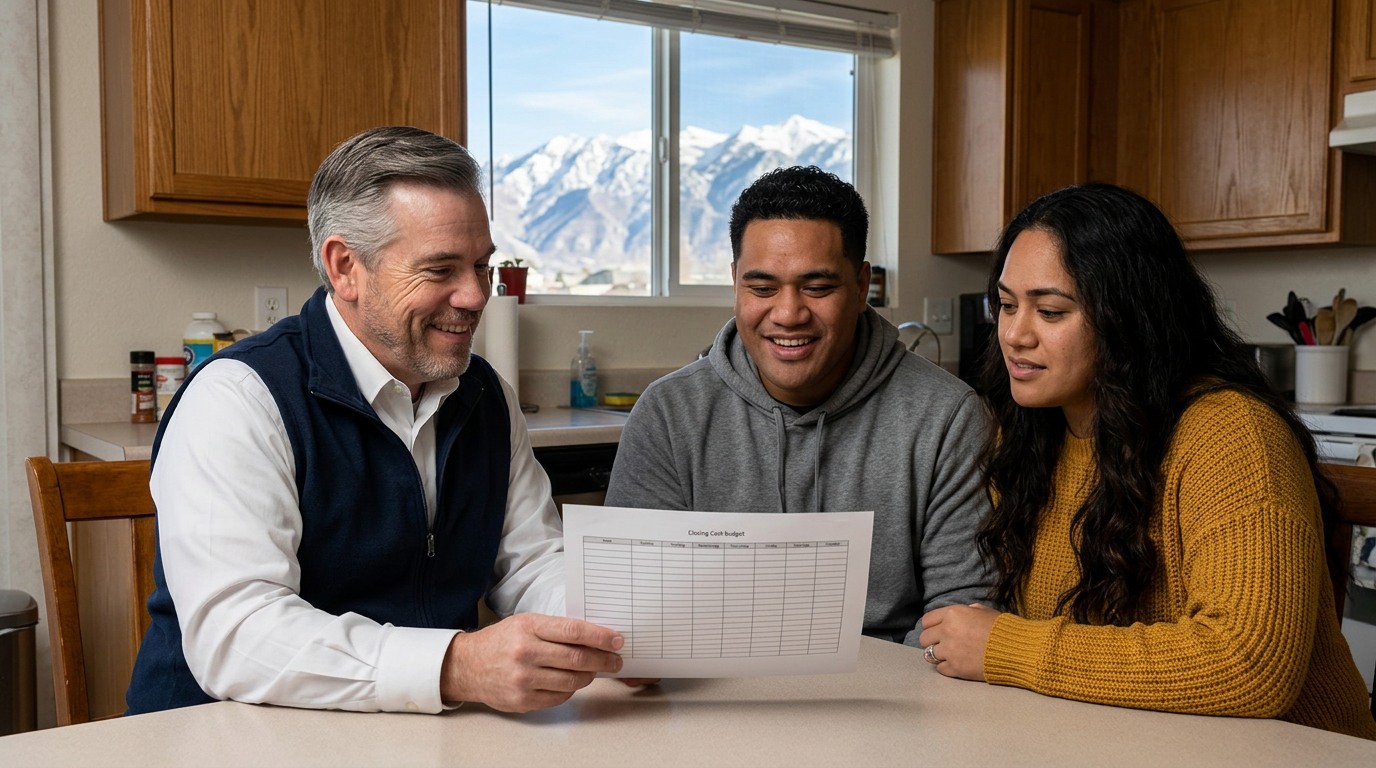
Tres “The Magic Mortgage Lender” Miller in his navy vest and white shirt reviewing a closing-cost budget with a veteran homebuyer in Orem, Utah.
Tres “The Magic Mortgage Lender” Miller walks through what a VA buyer should budget for closing costs in Orem, Utah.

Executive summary

A Orem, Utah guide to VA closing costs: what a veteran should budget beyond zero-down financing, where the money goes, which fees the VA restricts, and how seller-paid costs change the number.

  • Zero-down VA financing still requires cash at closing — typically 2% to 4% of the price.
  • Prepaid taxes and insurance are often the largest single part of cash to close.
  • The VA funding fee applies unless the veteran is exempt; it can be financed into the loan.
  • The seller can pay all normal closing costs, plus up to 4% in concessions.
  • A written loan estimate early in the process turns a guess into a real budget number.

The direct answer

A VA buyer in Orem, Utah should budget roughly 2% to 4% of the purchase price for closing costs and prepaid items, even with zero-down financing. That covers lender charges, title and escrow fees, recording fees, the VA funding fee (unless exempt or financed), and prepaid property taxes and homeowners insurance.

Zero down does not mean zero cash. The down payment is the only major cost the VA loan eliminates — everything else still has to be paid at closing, by the buyer, the seller, the lender, or some negotiated combination.

Executive summary

  • Zero-down VA financing still requires cash at closing — typically 2% to 4% of the price.
  • Prepaid taxes and insurance are often the largest single part of cash to close.
  • The VA funding fee applies unless the veteran is exempt; it can be financed into the loan.
  • The seller can pay all normal closing costs, plus up to 4% in concessions.
  • The VA prohibits the veteran from paying certain fees; the lender or seller covers those.
  • A written loan estimate early in the process turns a guess into a real budget number.

Where the money goes

CategoryWhat it coversWho can pay it
Lender chargesOrigination, underwriting, processing, credit report, appraisalBuyer, seller, or lender credit
Title and escrowTitle insurance, settlement or escrow fee, document preparationBuyer or seller, by negotiation
Government recordingCounty recording fees for the deed and mortgageBuyer or seller
VA funding feeThe VA's one-time fee — varies by down payment and first or subsequent useFinanced into the loan, paid in cash, or covered as a seller concession
Prepaid itemsFirst year of homeowners insurance, several months of property taxes and insurance into escrow, prepaid interestBuyer or seller
VA-restricted feesCertain fees the veteran may not pay, such as some attorney or escrow-related chargesLender or seller — never the veteran

What is specific to Orem

Orem offers some of the most attainable price points in north Utah County, from condos and townhomes to established single-family homes. Lower prices mean lower dollar amounts for title, escrow, and prepaids — but on a tighter budget, every thousand dollars of cash to close matters more.

In Orem, condos and townhomes often carry HOA transfer fees and prorated dues, and the condo project itself must be VA-approved. Confirm both early so a surprise charge or an unapproved project does not derail a zero-down purchase.

Confirm eligibility and documents in the Orem VA eligibility guide, and see how much of these costs a seller can cover in the Orem VA seller concessions guide.

Common misunderstandings about VA closing costs

The most common myth is that a zero-down VA loan means walking into closing with no money at all. The down payment is gone, but closing costs and prepaid items are not — unless the seller or lender covers them. A second myth is that the VA sets or caps closing costs; it does not. The VA only restricts a small set of fees the veteran cannot pay. Everything else is set by the lender, the title company, and the contract.

The practical point for Orem buyers: the number that matters is cash to close on a written loan estimate, not a rule of thumb. Get the estimate before you shop seriously, and the budget question answers itself.

How Tres would evaluate this

A Orem veteran is pre-approved with zero down and asks how much cash to actually have ready. Tres reviews three things: a written loan estimate at the real price point so the budget is a number instead of a guess, whether the veteran is exempt from the funding fee or should finance it, and whether a seller-paid cost request makes sense given how the specific Orem listing is positioned.

This is an illustrative decision framework, not a description of a specific client or completed transaction.

What to verify before you decide

  • Your written loan estimate at the actual price point — not a percentage rule of thumb.
  • Whether you are exempt from the VA funding fee, and whether to finance it if not.
  • How many months of property taxes and insurance will be collected into escrow.
  • Which fees the VA prohibits you from paying, and who is covering them.
  • Whether a seller-paid closing-cost request fits the specific listing and your offer strategy.
  • Any HOA transfer fees or prorated dues on the specific property.

Verify current VA funding-fee and fee rules with the U.S. Department of Veterans Affairs and a Utah-licensed mortgage banker.

Myths vs. Facts

Myth

Zero down means zero cash at closing.

Fact

The down payment is eliminated, but closing costs and prepaid items remain — unless the seller or lender covers them.

Myth

The VA sets or caps closing costs.

Fact

The VA only restricts a small set of fees the veteran cannot pay. Everything else is set by the lender, the title company, and the contract.

Myth

The funding fee is always paid in cash.

Fact

The funding fee can be financed into the loan, paid in cash, or covered as a seller concession — and some veterans are exempt.

Myth

Closing costs are the same everywhere.

Fact

Title, escrow, and prepaid items scale with the price of the home, so costs differ meaningfully between price bands.

Myth

A rough percentage is enough to budget.

Fact

The number that matters is cash to close on a written loan estimate at the actual price point.

Common mistakes to avoid
  • ·Budgeting only for the down payment and forgetting closing costs.
  • ·Underestimating prepaid taxes and insurance.
  • ·Not checking funding-fee exemption status.
  • ·Skipping the written loan estimate until after an offer is accepted.
  • ·Missing HOA transfer fees or prorated dues on the specific property.
  • ·Assuming the seller must pay costs because the loan is VA.
Today's action

Before your next Orem offer, get a written loan estimate at the real price point, confirm your funding-fee status, and decide who pays which costs before you negotiate.

Utah VA Buyer Cash-to-Close Worksheet (PDF)
Download PDF

Frequently Asked Questions

Ask the Authority
  • ?How much cash do I need to close on a VA loan in Orem?
  • ?What is the VA funding fee and am I exempt?
  • ?Can the seller pay my closing costs?
  • ?What are prepaid items?
  • ?Which fees can a VA buyer not pay?

This asset is educational only and is not legal, tax, VA-benefit, or personalized financial advice, and it is not a loan approval or commitment to lend. VA funding-fee, entitlement, appraisal, closing-cost, and concession rules change; verify current requirements with the VA and a Utah-licensed mortgage banker.

This article sits inside our VA loans coverage. For the full picture, start at the Utah VA loan specialist page, browse the VA Loan Resource Center, read about Tres Miller, or schedule a 15-minute consultation.

Related reading: eligibility and your COE, entitlement, VA appraisals, the funding fee, and the IRRRL streamline refinance.

Keep learning

Related consumer guides
Related calculators
  • Utah VA Loan Calculator
    Estimate a zero-down Utah VA loan payment, model the VA funding fee, and compare VA against FHA and conventional financing.
  • Utah Mortgage Calculator
    Estimate a Utah mortgage payment including principal, interest, taxes, and insurance.
Related knowledge assets
  • VA Loan Eligibility in Orem, Utah: Who Qualifies and What Documents Matter
    Who is eligible for a VA loan in Orem, Utah and exactly which documents a veteran should prepare before applying — the Certificate of Eligibility, DD-214 or Statement of Service, NGB-22 and point statements, disability award letters — plus how entitlement, the funding fee, occupancy, and the VA appraisal behave in central Utah County.
  • VA Seller Concessions in Orem, Utah: What Costs Can the Seller Pay?
    A Orem, Utah guide to VA seller concessions: which buyer costs a seller can pay, how the 4% concession cap works, which fees the VA prohibits the veteran from paying, and how concession requests affect an offer.
  • The Complete Utah VA Loan Guide
    The VA home loan is the strongest financing benefit available to eligible Utah veterans, service members, and qualifying surviving spouses: no required down payment within entitlement, no monthly mortgage insurance, and a reusable lifetime benefit. This guide covers how the guaranty works, who qualifies, what a Utah VA purchase actually costs, funding-fee exemptions, appraisal and property requirements, entitlement reuse and assumptions, and the Utah-specific details that decide real transactions.
Tres Miller, Mortgage Banker, NMLS #217768

Written by

Tres Miller

Mortgage Banker · NMLS #217768 · U.S. Army veteran

Tres Miller is a Utah mortgage banker specializing in reverse mortgages and VA loans, with broader experience across Utah residential mortgage financing. A U.S. Army veteran, he has spent more than three decades helping Utah homeowners buy, finance, and protect their homes.

Specializing in reverse mortgages and VA loans, with broader work across Utah residential mortgage financing. Lending in Utah since 1995. Serving Utah County, Salt Lake County, Davis County, and all 29 Utah counties.

About TresProfessional historySchedule a consultation435-229-9797

Originally published October 7, 2026

Educational only. This asset does not constitute legal, tax, or financial advice. Programs, guidelines, and limits change frequently — verify current terms with a licensed Utah mortgage banker. Tres Miller serves homebuyers and homeowners throughout Utah — all 29 counties. Alpine, Highland, Cedar Hills, Mapleton, and Orem are a focus of our published content, not a limit on where mortgage services are provided. Tres Miller, Mortgage Banker, NMLS #217768 · JMJ Financial Group, Company NMLS #1866296 · Equal Housing Lender.

Ready to take the next step?

Talk to Tres — straight answers, real options, no pressure.